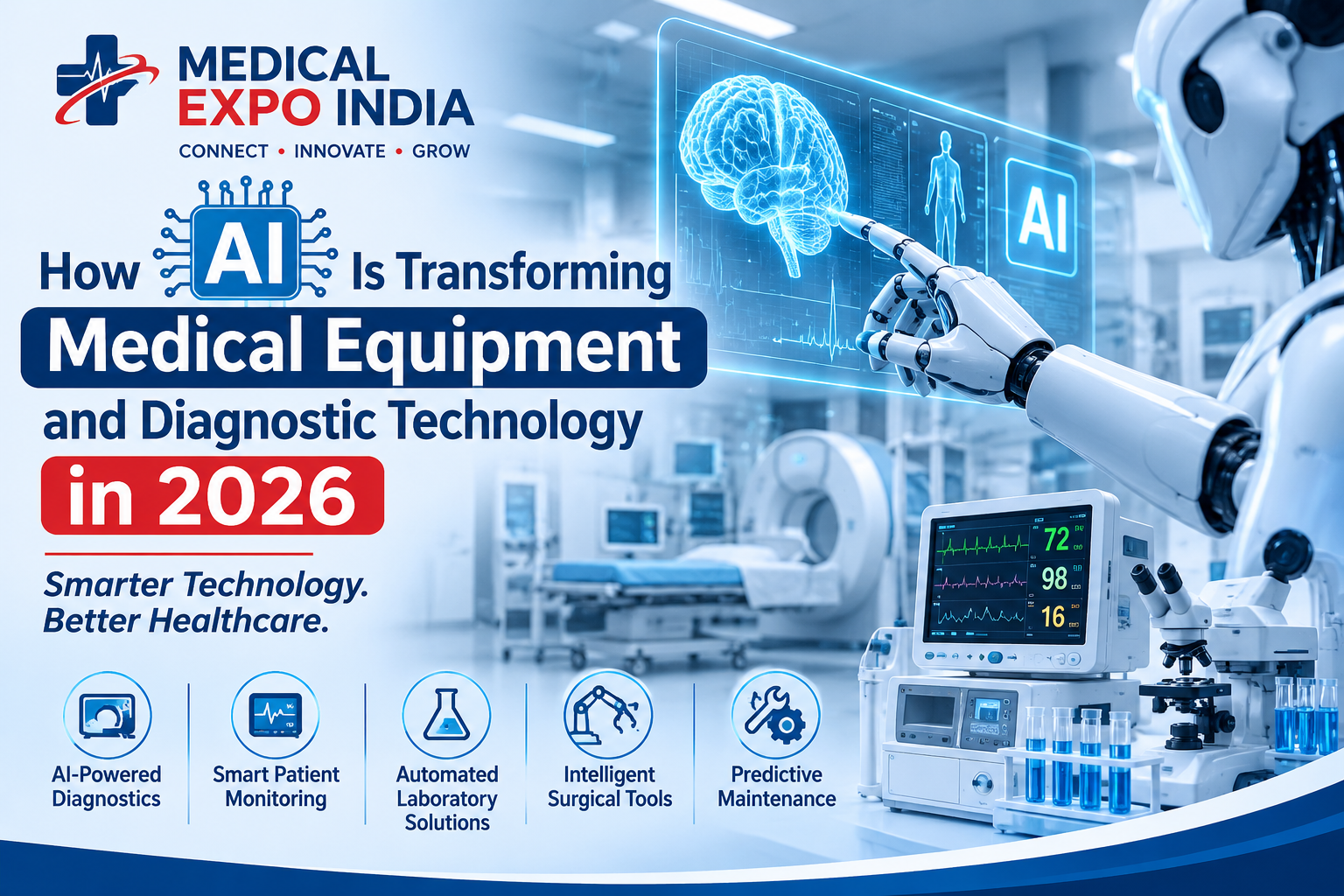
Healthcare technology is evolving rapidly, and Artificial Intelligence (AI) is becoming one of the most important drivers of innovation in the medical industry. From advanced diagnostic imaging to smart patient monitoring systems, AI is helping healthcare professionals improve accuracy, efficiency, and patient care. In 2026, the integration of AI in medical equipment is transforming how hospitals, diagnostic laboratories, and healthcare facilities operate.
Medical equipment manufacturers are increasingly developing intelligent devices that can analyze medical data, identify potential health risks, and support faster clinical decisions. These innovations are not only improving healthcare services but also creating new opportunities for medical technology companies, equipment suppliers, distributors, and healthcare professionals.
Let's explore how artificial intelligence is transforming medical equipment and diagnostic technology in 2026.
1. The Growing Role of AI in Medical Equipment
Artificial Intelligence enables medical devices to process large amounts of information, recognize patterns, and generate useful insights. Unlike traditional medical equipment that mainly depends on manual operation and basic programmed functions, AI-enabled devices can support more intelligent and data-driven healthcare processes.
Today, AI technology is being integrated into various medical applications, including:
Diagnostic imaging and radiology systems.
Patient monitoring equipment.
Laboratory testing and analysis systems.
Surgical assistance technologies.
Digital healthcare and remote monitoring devices.
Clinical decision-support systems.
The growing adoption of AI in medical equipment is helping healthcare providers streamline daily operations, reduce repetitive tasks, and improve the overall quality of medical services.
2. AI-Powered Diagnostic Imaging Is Improving Detection
Diagnostic imaging plays an essential role in identifying diseases and medical conditions. Technologies such as X-ray machines, CT scanners, MRI systems, and ultrasound equipment generate detailed images that help doctors evaluate patients.
AI-powered imaging solutions can analyze these images and highlight patterns that may require further medical examination.
Some important applications include:
X-ray analysis: AI systems can help identify suspicious patterns associated with chest conditions and other abnormalities.
CT scan interpretation: AI-assisted tools can support the identification and measurement of abnormalities in medical scans.
MRI analysis: Intelligent imaging software can help analyze complex structures and support image interpretation.
Mammography: AI tools can assist radiologists in identifying suspicious areas in breast imaging.
These technologies are designed to support medical professionals rather than replace their expertise. Doctors and radiologists remain responsible for interpreting findings and making clinical decisions.
3. Smart Patient Monitoring Systems for Better Healthcare
Patient monitoring equipment is essential in intensive care units, emergency departments, operating theatres, and critical care facilities.
Modern AI-enabled monitoring systems can continuously analyze patient information, including:
Heart rate.
Blood pressure.
Oxygen saturation (SpO2).
Respiratory rate.
Body temperature.
Other relevant clinical indicators.
AI algorithms can help identify unusual patterns and alert healthcare professionals when patient readings require attention.
For example, intelligent monitoring systems may identify changes in vital signs that could indicate a potential health risk. This allows medical teams to investigate concerns and respond appropriately.
The integration of AI in medical equipment is making patient monitoring more data-driven and supporting better clinical workflows in modern hospitals.
4. AI Is Transforming Medical Laboratory Equipment
Diagnostic laboratories handle a large number of samples and tests every day. Accuracy, efficiency, and timely reporting are essential for laboratory operations.
AI and automation are helping laboratories improve testing workflows through intelligent laboratory equipment and software.
Some major applications include:
Automated Sample Processing: AI-enabled systems can support sample identification, sorting, and workflow management, reducing repetitive manual activities.
Advanced Diagnostic Analysers: Intelligent laboratory analysers can process test information and help identify unusual patterns that may need additional review.
Digital Pathology: AI-powered image analysis can assist pathologists in examining digital tissue slides and identifying areas of interest.
Quality Control: AI-based monitoring can help detect inconsistencies in laboratory processes and support quality management.
These developments are creating new possibilities for diagnostic laboratories looking to modernize their infrastructure and improve operational efficiency.
5. AI-Assisted Surgical Equipment and Medical Robotics
Surgical technology is another area experiencing significant innovation through artificial intelligence. AI-assisted surgical systems are designed to support surgeons with improved visualization, precision, and access to relevant information.
Modern surgical technologies may include:
AI-assisted surgical imaging.
Advanced navigation systems.
Computer-assisted surgical planning.
Intelligent operating theatre equipment.
Robotic-assisted surgical platforms.
These systems can help surgeons plan procedures, interpret imaging information, and perform certain tasks with enhanced technological assistance.
However, AI-assisted surgical equipment requires proper clinical validation, trained professionals, and appropriate regulatory oversight. The surgeon remains responsible for patient care and surgical decisions.
6. Predictive Maintenance: Reducing Medical Equipment Downtime
Medical equipment reliability is extremely important for hospitals and diagnostic centres. Unexpected equipment failures can interrupt healthcare services and increase maintenance expenses.
AI-powered predictive maintenance solutions use operational data, sensor information, and equipment performance patterns to identify possible technical issues.
For example, connected medical devices may provide information about:
Equipment operating conditions.
Temperature variations.
Usage patterns.
Performance irregularities.
Maintenance requirements.
By analyzing this information, healthcare facilities can identify potential maintenance needs before serious equipment failures occur.
This approach can help hospitals improve equipment availability, manage maintenance schedules, and reduce unexpected operational interruptions.
7. Benefits of AI Integration in Healthcare Technology
The growing use of AI in medical equipment offers several advantages to healthcare providers, medical professionals, and patients.
Improved Diagnostic Support
AI-powered tools can help medical professionals analyze complex medical information and identify patterns that may require further investigation.
Better Operational Efficiency
Automation and intelligent software can reduce repetitive tasks and improve workflows in hospitals and diagnostic laboratories.
Faster Data Analysis
AI systems can process large volumes of medical information quickly, supporting timely clinical evaluation.
Enhanced Patient Monitoring
Intelligent monitoring solutions can identify unusual changes in patient readings and provide alerts for medical review.
Better Equipment Management
Predictive maintenance technologies can help healthcare facilities monitor equipment performance and plan maintenance activities.
Although these benefits are promising, the effectiveness of AI depends on data quality, system validation, proper implementation, and professional supervision.
8. Challenges in Adopting AI-Based Medical Technology
Despite its advantages, AI adoption in healthcare also comes with certain challenges. Hospitals and medical institutions must consider these factors before investing in intelligent medical equipment.
Data Privacy and Security: Medical information is sensitive. Healthcare organizations must implement appropriate data protection and cybersecurity measures.
High Implementation Costs: Advanced AI-enabled devices and supporting infrastructure may require significant investment.
Regulatory Compliance: Medical AI solutions must meet applicable safety, quality, and regulatory requirements before clinical use.
Staff Training: Healthcare professionals need appropriate training to operate and interpret AI-supported systems effectively.
Accuracy and Reliability: AI tools must be properly validated to reduce errors and ensure reliable performance across different patient populations.
Addressing these challenges is essential for the safe and responsible adoption of AI in healthcare.
9. The Future of AI in Medical Equipment and Diagnostics
The future of healthcare technology will increasingly depend on intelligent systems, connected medical devices, and data-driven decision-making.
In the coming years, several developments are expected to influence the medical equipment industry:
More advanced AI-powered diagnostic imaging solutions.
Greater adoption of connected and smart medical devices.
Increased automation in diagnostic laboratories.
Improved remote patient monitoring technologies.
Integration of AI with hospital information systems.
More personalized healthcare through data analysis.
These developments are expected to create new opportunities for medical device manufacturers, healthcare technology companies, distributors, and medical equipment suppliers.
For businesses operating in the medical technology sector, staying informed about these developments will be important for understanding changing healthcare requirements and emerging market opportunities.
10. Explore the Latest Medical Technology Innovations at Medical Expo India
As artificial intelligence continues to reshape healthcare, medical exhibitions are becoming important platforms for discovering new technologies, products, and industry developments.
Medical Expo India provides opportunities for medical equipment manufacturers, suppliers, distributors, hospital professionals, and healthcare businesses to connect and explore innovations across the medical technology sector.
Visitors can discover developments in medical devices, diagnostic equipment, hospital infrastructure, laboratory technology, surgical instruments, and other healthcare solutions.
Whether you are a healthcare professional looking for advanced medical technologies or a business interested in expanding its network, medical exhibitions offer valuable opportunities to understand industry trends and build meaningful business connections.
Conclusion
Artificial intelligence is changing the medical equipment industry by supporting advanced diagnostics, intelligent patient monitoring, laboratory automation, and predictive equipment maintenance. The growing adoption of AI in medical equipment is helping healthcare facilities move towards more efficient, connected, and data-driven operations.
As technology continues to advance in 2026, medical device manufacturers, suppliers, and healthcare professionals must stay updated with emerging innovations. Exploring these developments through industry platforms and exhibitions such as Medical Expo India can help businesses identify new opportunities and stay connected with the evolving healthcare technology landscape.